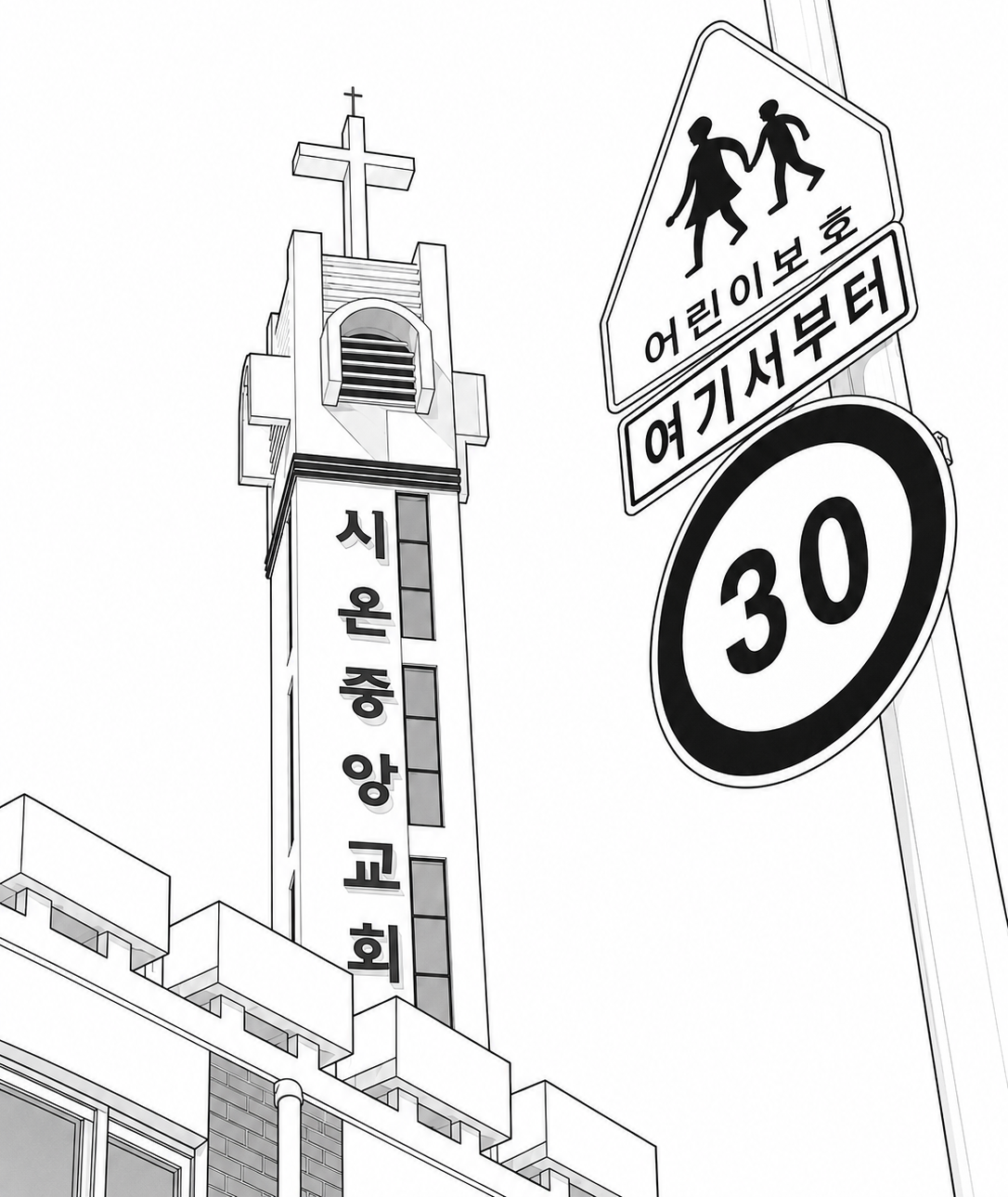
We have visited South Korea so many times, for both work and holidays, that there is a sense of familiarity every time we arrive. Yet every trip still brings new discoveries. This sense of adventure, together with the incredible hospitality we have experienced there, keeps drawing us back.
On one occasion in Seoul, we were trying to find our way to the N Seoul Tower at the top of Mount Namsan in the Namsan Park. Google Maps had got us so far but we were unsure where to go next and stopped to check, As we stared at our phone screens, a passerby came up to us and told us where to go. We set off again. Three minutes later we heard a voice shouting from behind us. We turned round to find the person who had given us instructions running up behind us. Despite his instructions we had taken the wrong turn and he had come after us to put us back on the right path. He must have been watching us all the time since we left him to make sure we didn’t do exactly what we had just done.
Another time, on the day we arrived in Seoul, we passed an extremely busy small restaurant. It looked good so we went in and sat down. We sat down and then discovered they offered a set menu and we didn’t have enough Won to pay. As they did not take cards, we were about to leave when the owner, who spoke no English, gestured to show her how much we had. She accepted it and brought us our food. After a delicious and very filling meal, we left. Later that evening after finding a cashpoint we came back to pay the difference. The owner laughed and refused to take the extra cash.
Seoul
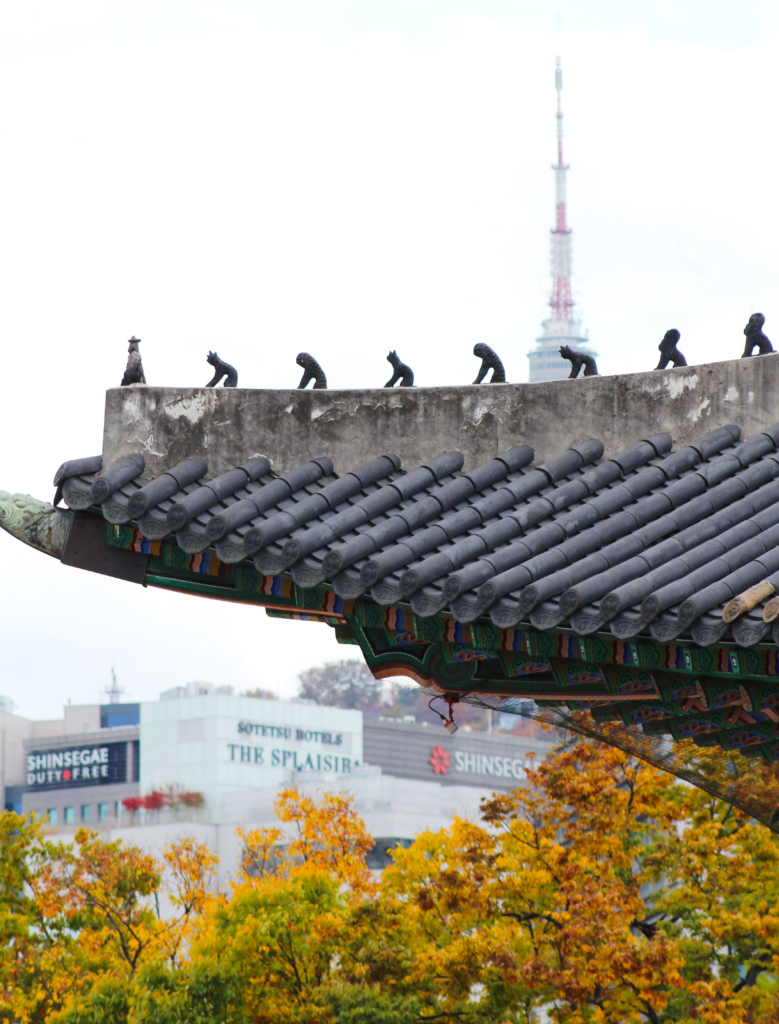
No trip to Korea would be complete without spending some time in Seoul. The city is an interesting blend of old and new. Most of it is very modern but mixed in with the glass skyscrapers there is a healthy scattering of older temples and palaces.
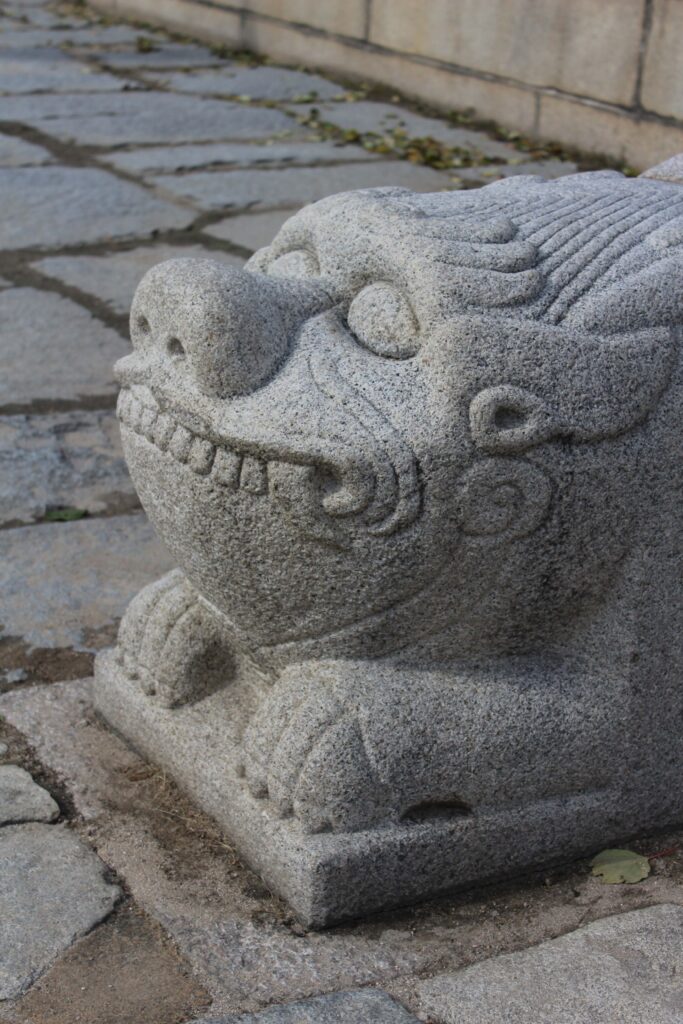
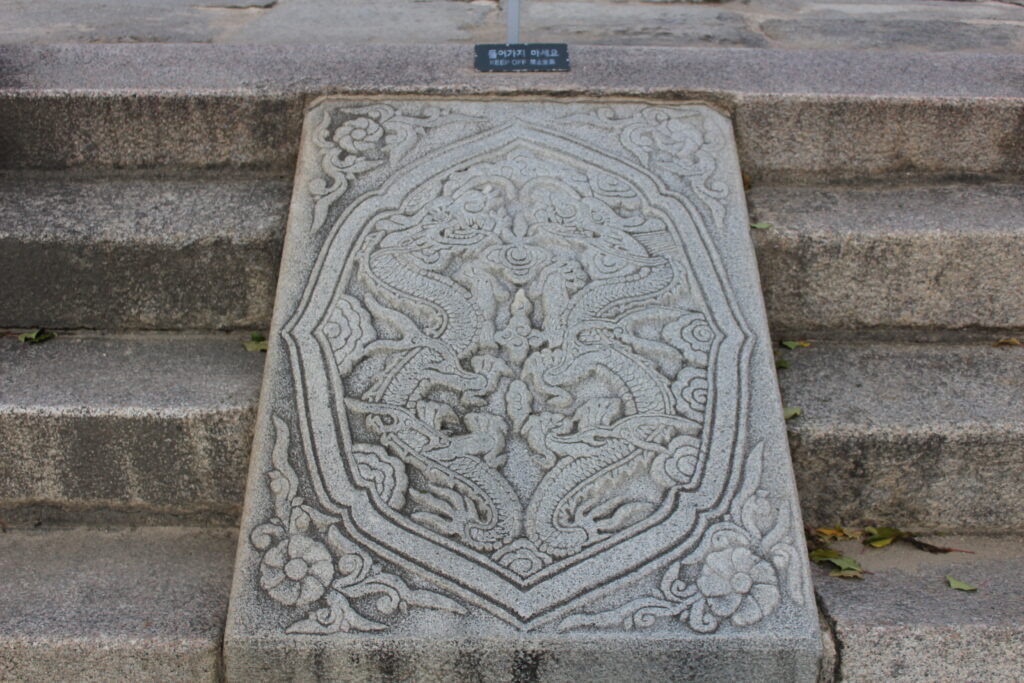
Of all the palaces in Seoul, our favourite is Gyeongbokgung. It dates back to the 14th century and although a lot of it was destroyed by the Japanese during the occupation, all the bits that were destroyed have been restored so you still get the sense of what it was like at its peak.
Bukchon Hanok Village is another oasis of the traditional. Walking round this district, it was easy to see how the city would have looked in the past
Walking in Seoul
Perhaps more than the palaces or historical monuments, what we have always enjoyed in Seoul is walking around the city and taking in sights. I should probably add a caveat. You need to pick the right time of year. Whilst Seoul is pretty warm in summer (temperatures can go over 30 degrees ), it can feel very cold in winter. We remember one February visit when temperatures were below zero and the wind was as sharp as razors. In those conditions, it was definitely not a pleasure to walk anywhere.
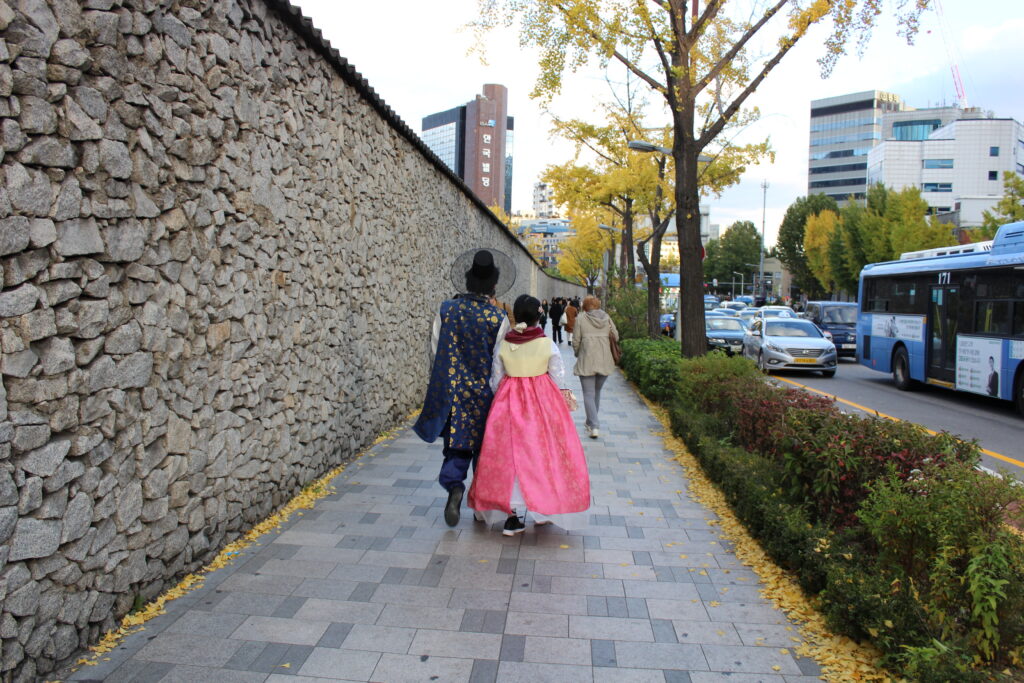
Assuming that the weather is reasonable there are plenty of great walks to take in different parts of Seoul. The paths on the side of the Hangang – the main river through the city – offer some great views and are very popular. Itaewon is the most international part of Seoul and makes an interesting place to wander. During the day it is a place for boutiques, cafés, vintage and specialty shops. At night it is known for its restaurants, bars, pubs, clubs and rooftop venues. Insa-dong is another interesting district to wander around. It is known as an artists’ district and there are literally hundreds of art galleries there – most of these are displaying work of contemporary Korean artists. We always enjoy spending time in them and have found lots of pieces that we really like. In addition, there are a lot of shops in the area selling traditional Korean handicraft. So it’s not a bad place to go if you are in the market for souvenirs or presents to take home.
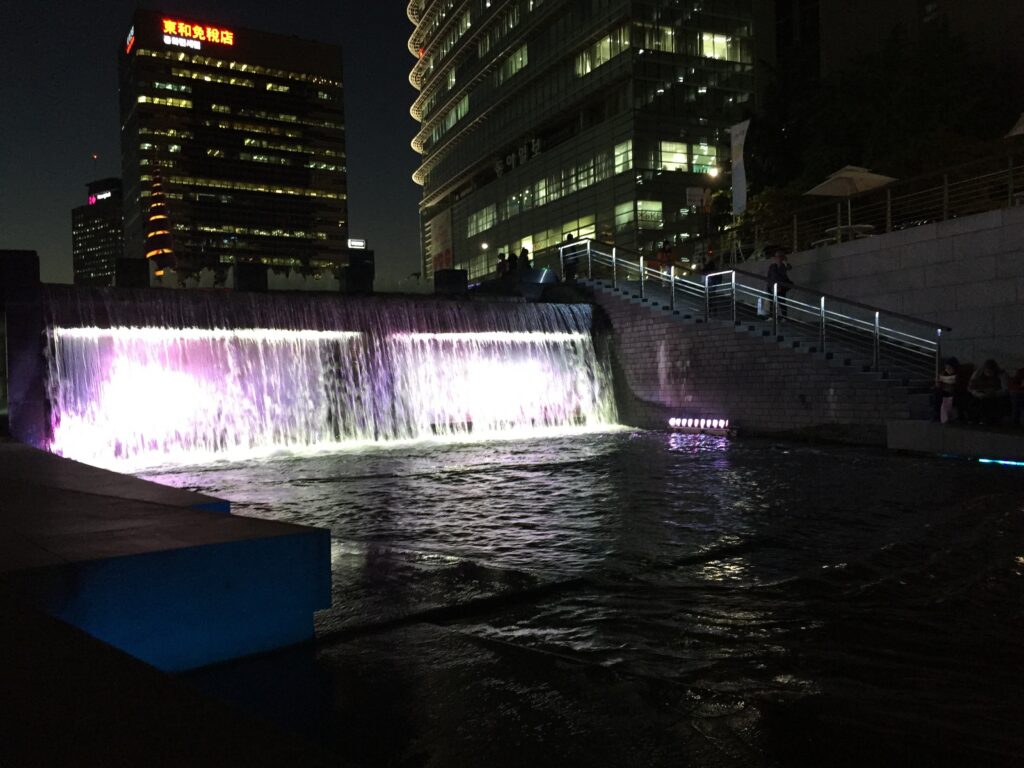
Of all the possible walks in Seoul, the route along the Cheonggyecheon Stream is probably the one that sticks most in our memories. This stream runs right through the middle of Seoul but as you walk along it you are the equivalent of a storey below ground level. The sound of traffic is hushed enough for you to hear the running water and the experience leaves a lasting sense of hidden calm in the middle of the busy city. That makes it something special even before you know any of its history. What was originally a natural stream has been channelled and confined since shortly after Seoul became the capital in 1394. In the following six centuries its history has mirrored Seoul’s. By the 1940s Seoul’s growing population and worsening sanitation had turned parts of the stream into a polluted urban waterway. Things only got worse in the 1950s when large numbers of poorer residents lived in makeshift settlements beside the stream. The situation was so bad by 1958 that the government decided to cover the stream and build roads over it. The project was finally finished in the late 1970s and the stream stayed buried until the 2000s when the covering was removed and about six kilometres of the stream were turned into the charming public space it now is.
Unexpected discoveries
For us an important part of the pleasure of walking around Seoul is finding unexpected surprises on the way. On our early visits, we were amazed by the number of churches. Some of these looked like our expectation of a traditional church. Others were housed in modern skyscrapers and could have been mistaken for offices or shops if it were not for the crosses, many in bright neon, outside them.
On our most recent visit, we stumbled on the largest bookshop either of us had ever seen. Finding it full of people was an exciting surprise. Another was meeting a group of go players in a park and being offered sweets by one of them as he told us about his affection for America. We did admit upfront that we weren’t Americans but accepted the gift anyway. The final discovery that day was a temporary outdoor library where comfy seats and stands of books had been set out on a grassy square in the middle of town so that passersby could sit and read for as long as they liked or simply spend time relaxing.
Street food
One of the great attractions of walks in Seoul is the opportunity to pick up some street food along the way. Myeong-dong and Gwangjang Market are two of the best known options and offer the chance to choose from a myriad of stalls. But they are by no means the only options. Despite the number of visits we have made to Korea, I suspect we have probably tried less than half of what is on offer. Gimbap – rice, vegetables and fillings rolled in dried seaweed and sliced into rounds – is one very common offering. Another, tteokbokki, deserves a special mention and a health warning. These are what are often called rice cakes. Chewy, cylindrical and looking like a kind of pasta, they are served in a thick, pungent red sauce. The first time we tried them we saw a mother and school-age daughter order a large bowl just in front of us. They downed them swiftly. When we asked for the same, the person serving us tried to dissuade us, warning that the sauce was extremely spicy. We insisted. She was right. Although we, especially E, are usually pretty good with spicy food, it took a lot of water to get us through our bowl of tteokbokki. That is not to say that they weren’t also delicious – there is something mildly addictive about the deep, savoury, slightly sweet taste of the fermented chilli sauce.
A day at the bathhouse
Another lasting memory of Seoul is a visit we made to a bathhouse, though using that name rather undersells it. Spread over four or five floors, it must have been large enough to accommodate hundreds of visitors at the same time. The lowest floor is home to the baths with separate sections for men and women. In each there are tubs with water of various temperatures, jets and the opportunity to arrange a massage if you feel like one. The higher floors, which you move to after the baths, are not segregated by sex and contain places to sit and relax, multiple hot, warm and ice rooms, a restaurant and even places where visitors can sleep. With all of this available, a visit can easily eat up the best part of a day. And, especially in winter, it is a very good way to do so.
The DMZ
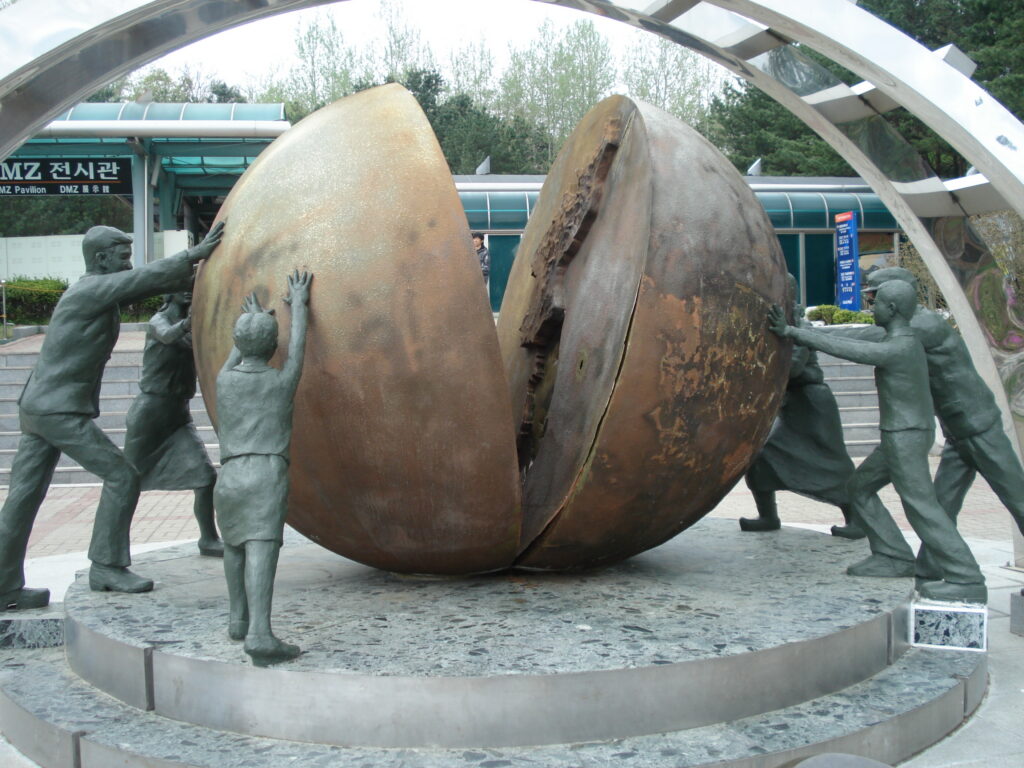
The Demilitarized Zone, or DMZ as it is usually referred to, is less than 50 miles from Seoul and so an easy day trip from the capital. All the hotels offer tours as do a lot of independent companies. This makes it easy to get there and it is well worth visiting. Most tours will give you a lot of the very sad history and will take you into one of the tunnels built by North Korean soldiers when they were actively trying to find ways of getting past the military build-up along the border. Visiting and talking to the guide about the scars the war has left and the fear that the conflict might re-erupt was very sobering but there were some lighter moments. One was hearing about the “flagpole war”. In the 1980s, South Korea erected a tall flagpole in its village in the DMZ. The North responded by building a taller one. By the end of the escalation, North Korea was flying the largest flag in the world on the tallest flagpole in the world. The flagpole was 160 metres tall and the flag flown from it was 30 x 60 m and weighed 270kg.
Bukhansan National Park
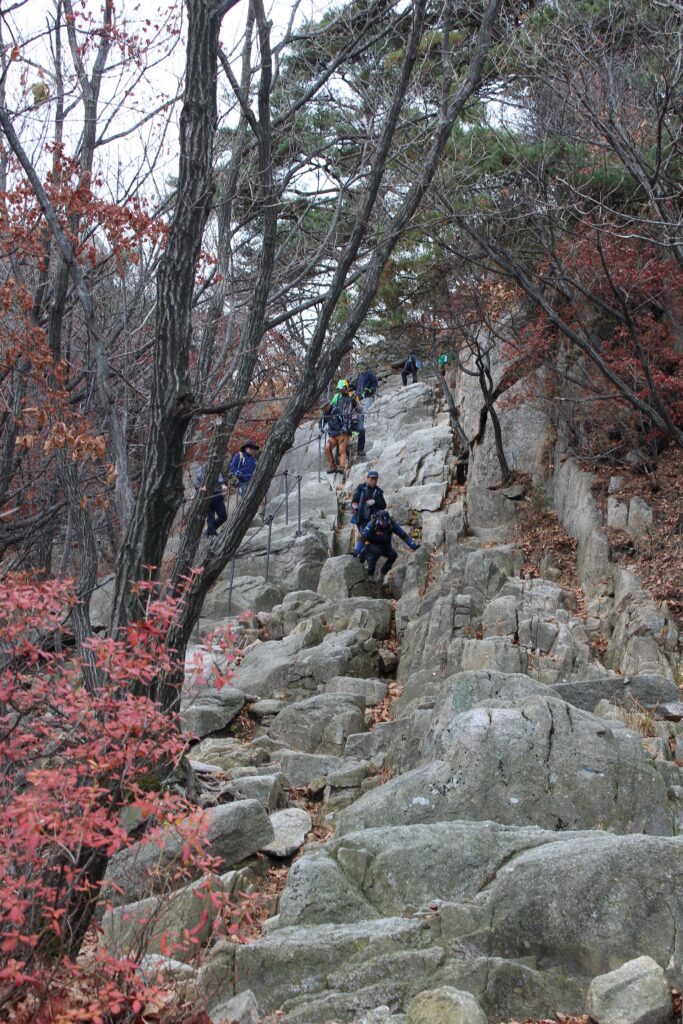
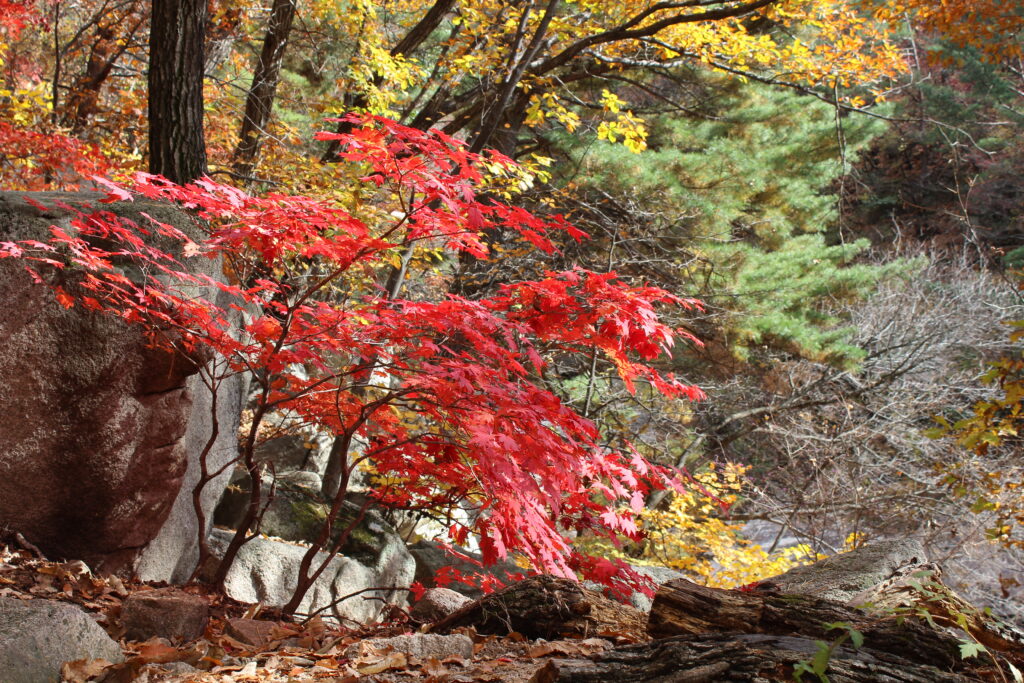
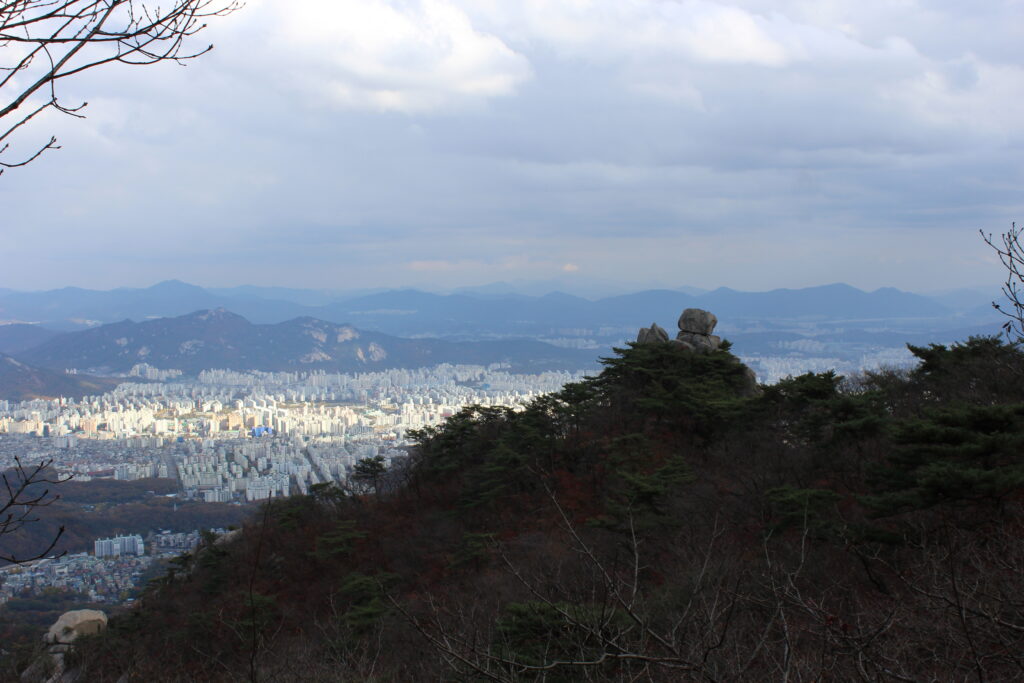
Bukhansan mountain is located right on the edge of Seoul and is very easy to reach by public transport. It is famous for its huge, pale granite peaks that rise out of wooded slopes. Historically known as Samgaksan, because of its three prominent peaks, Bukhansan has traditionally been counted among Korea’s O-ak, or Five Sacred Mountains. When we visited, we attempted to get to the top of Baegundae, the highest of the three peaks of Bukhansan. The terrain on the way was spectacular – steep cliffs, rocky ridges and valleys – but it also made the climb tough, even though the peak is only 862m above sea level. In the end, we decided to turn back before getting to the summit. That in no way spoiled the trip for us. The whole place was spectacular and we got high enough to get some extraordinary views across Seoul.
Hwaseong
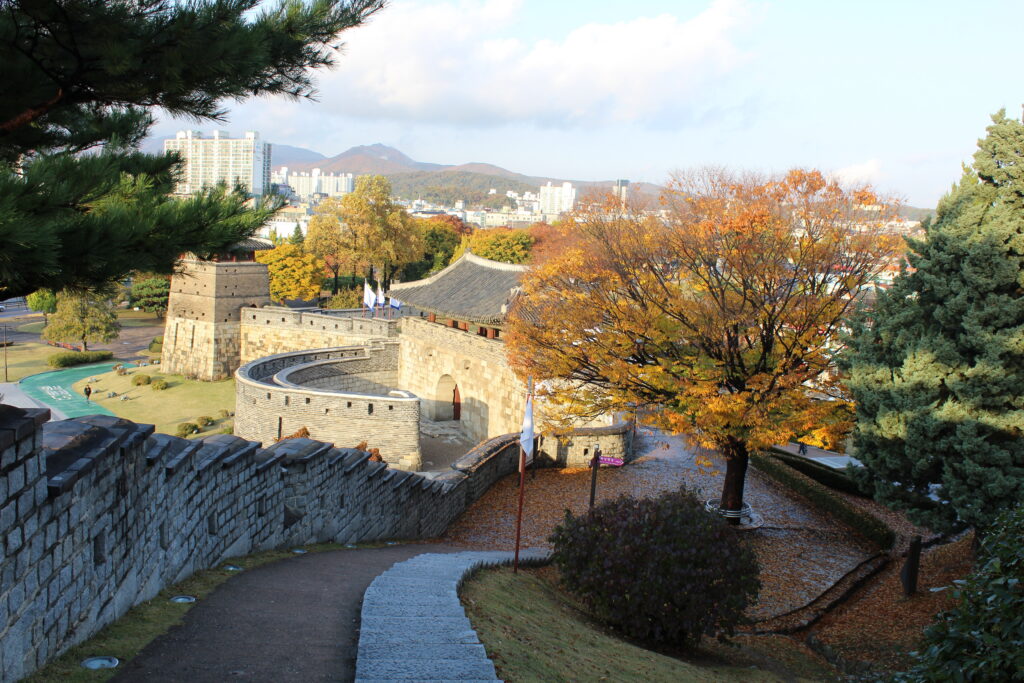
Hwaseong is a spectacular fortified city (now part of Suwon) about an hour and a half from Seoul by train. We had heard that it was impressive and decided to take a day trip there. We were not disappointed. Built in the 18th century, the city’s fortifications are largely intact. We walked round the entire six kilometres of the defensive wall in an afternoon. Along the way there are guard towers at regular intervals and plenty of picturesque views.
Busan and Gyeongju
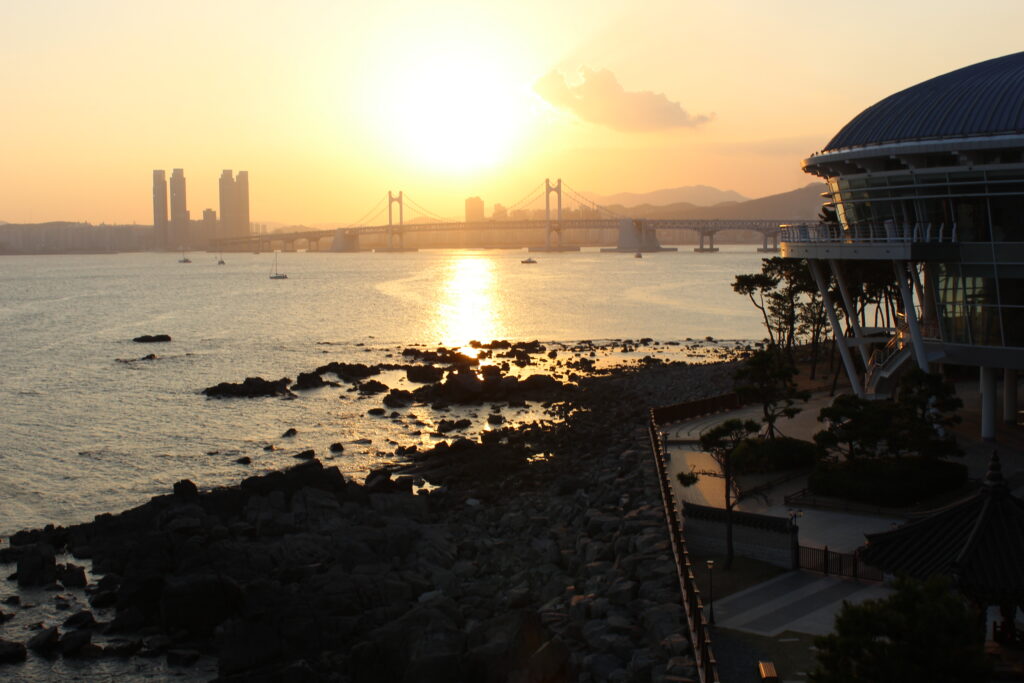
Busan is a two to three hour train journey away from Seoul, which probably makes it too far away for a comfortable day trip. But on one of our visits to Korea, we spent a happy few days in the city.
The feel of Busan is quite different to Seoul, mainly because of its port and seaside location. The beaches in the centre of town are quite spectacular with skyscrapers behind them – a combination that reminded us of Copacabana. We particularly enjoyed Haeundae beach. The hot springs located between it and the mountains just behind are what first made it famous. Now it is a popular beach holiday destination, particularly amongst Korean tourists. At one end of it there is a peninsula, Dongbaekseom, that you can walk out along. From the end of it there are sweeping views of the beach and other parts of the city. There is also a charming story connected with it that says that the poet and scholar Choe Chi-won (born 857) who used “Haeun” (usually translated as Sea Cloud) as a penname, visited the area and was so impressed by the sea, clouds, moon and mountains around Dongbaekseom that he carved three Hanja (Chinese) characters into a rock there: 海雲臺 — Haeundae (Sea-Cloud Terrace). The inscription, although worn, is still visible today and is said to be the origin of the beach’s name.
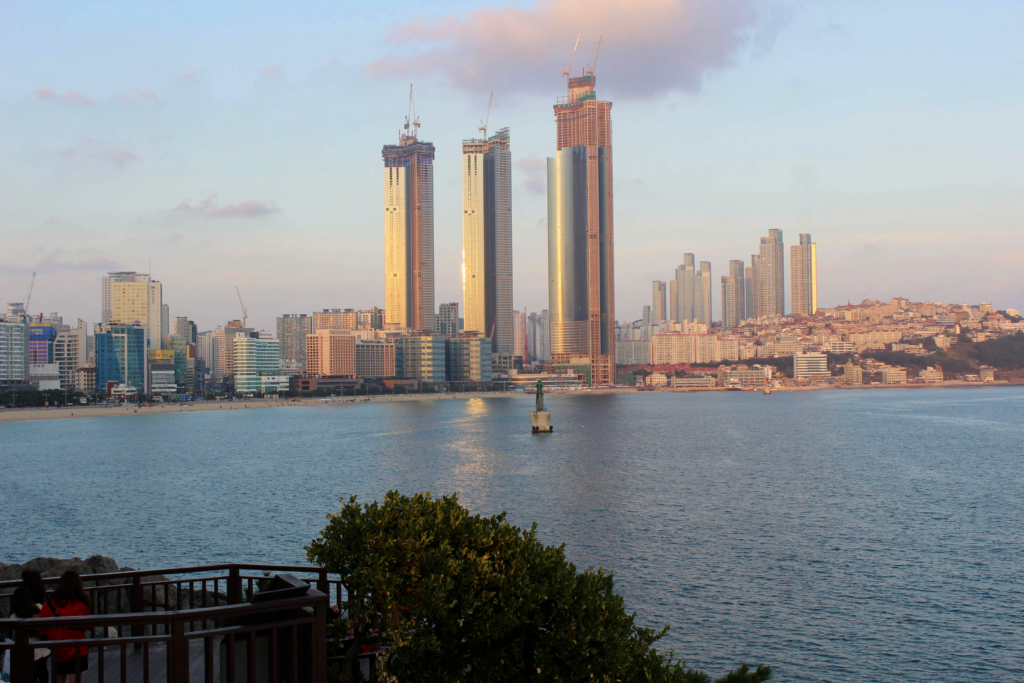
In addition to its beaches, Busan is famous for its international film festival which happens in October each year and is a major event in the global film calendar regularly attracting attendees from more than a hundred countries. We were in Busan at the wrong time of year to visit the festival but we did see Busan’s equivalent of the Hollywood Walk of Fame – BIFF Square where there are bronze plaques containing the handprints and signatures of prominent Korean and international actors, directors and filmmakers.
Very close to BIFF Square are Jagalchi Market and Gukje Market. Gukje Market is a huge maze of small shops in covered alleys selling clothing, cosmetics, household goods, electronics, toys and souvenirs. The tourism office warns that if you are not familiar with the layout you can easily get lost in this maze. Jagalchi Market is simply the largest and most vibrant fish market we have ever seen. Its impressive display of live fish, octopus, shellfish, crabs, squid and other seafood, alongside dried fish and freshly landed catches, makes Billingsgate look tiny. In addition to buying produce to take home, you can also eat on site at one of the many stalls on the upper storey. We did both, coming away with large quantities of dried squid.
Gyeongju
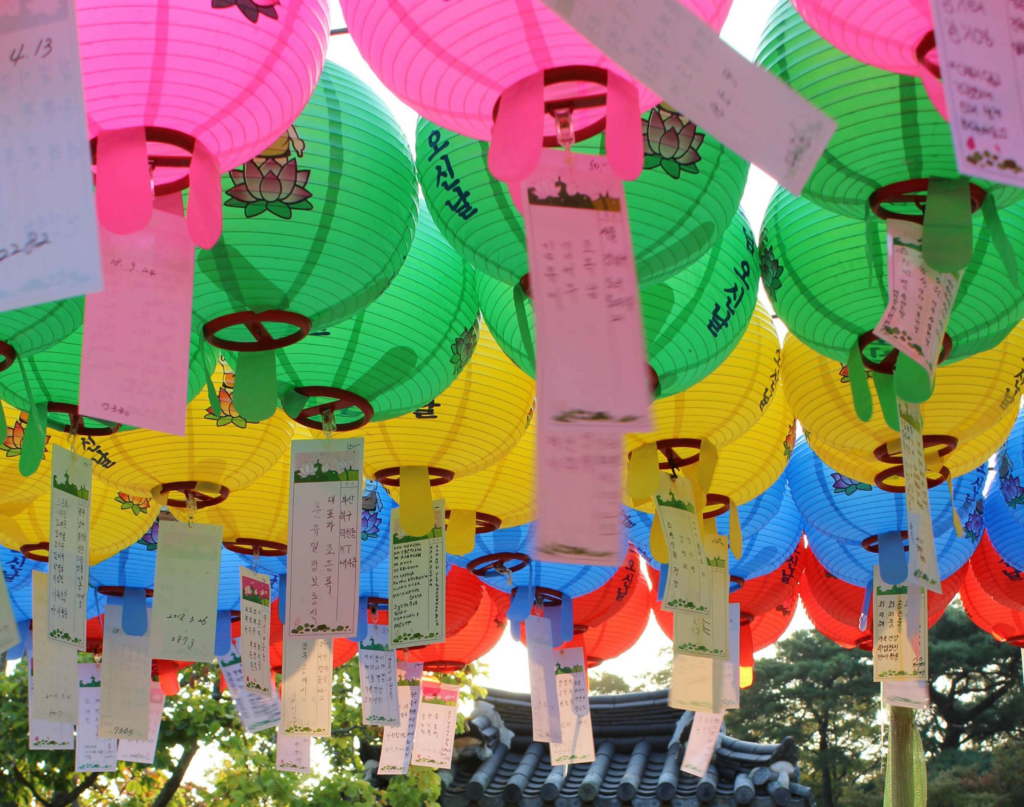
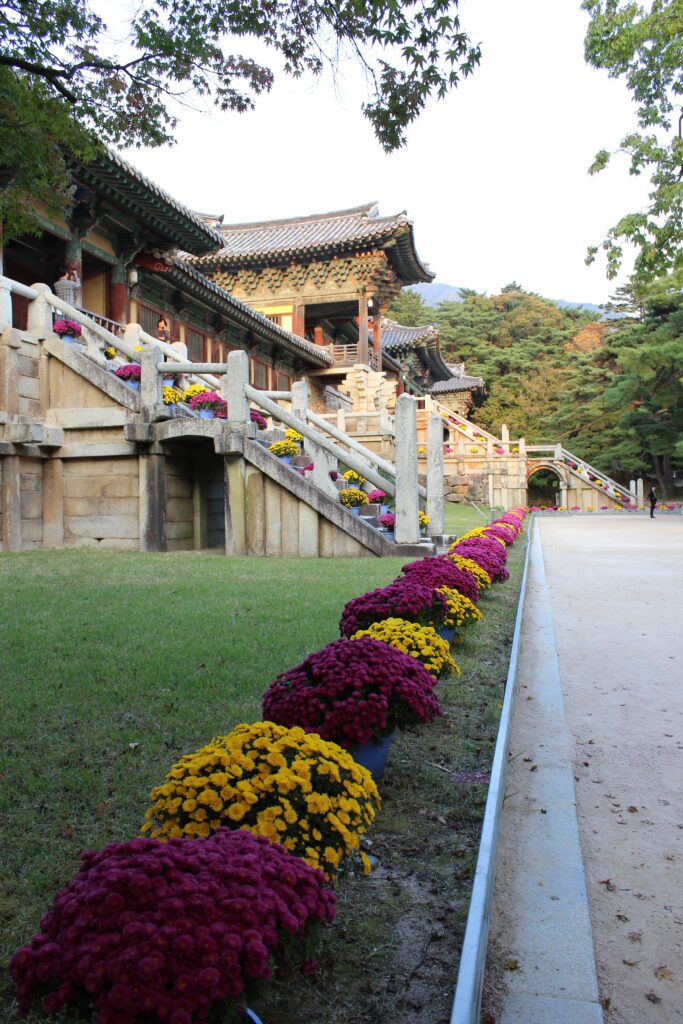
While we were in Busan, we took a day trip to Gyeongju (about half an hour away by train). From the station it took us about another half an hour to get to Bulguksa Temple, which was the main reason for our visit. It contains several National Treasures, and together with the nearby Seokguram Grotto is on the UNESCO World Heritage List. We just enjoyed the bright, light atmosphere. The colourful lanterns and the flowers growing around the temple were especially charming.
On the way back to the station, we stopped at the Donggung Palace and Wolji Pond (Moon Pond). The pond was created in 674 as part of the royal summer palace complex (Gyeongju was the capital of the Silla kingdom at the time). The open-air pavilions have been reconstructed, but for us it was the pond itself, which might be better described as a small lake, that was the real attraction. It radiated a kind of serenity and looked especially good in the evening lit up by the lights that now surround it.
Jeju Island
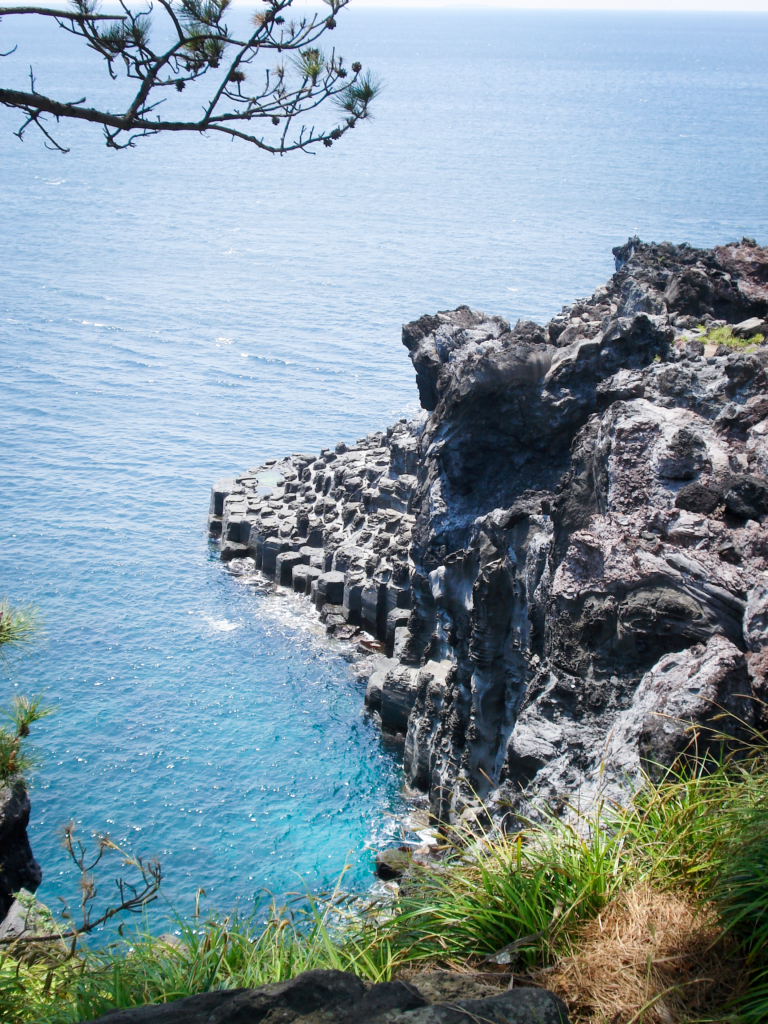
Before one of our first visits to Korea, we did a bit of research and discovered that the most popular destination in Korea for Korean tourists was Jeju Island, so we decided to visit.
As it is the most southerly part of Korea, it is also the warmest and, if we had been there at the right time of year, we might have spent more time on the beach. As it was, we found plenty to occupy our time. The island has a host of temples and museums ranging from the Jeju National Museum, which is dedicated to the island’s archaeology and history, to a football museum in the stadium that hosted three World Cup matches. When we discovered that it even has a museum dedicated to the subject of sex, our curiosity got the better of us and we visited albeit with some trepidation. It turned out to be far from seedy and included some interesting displays. One on perceptions of beauty and the history of foot binding stayed with us.
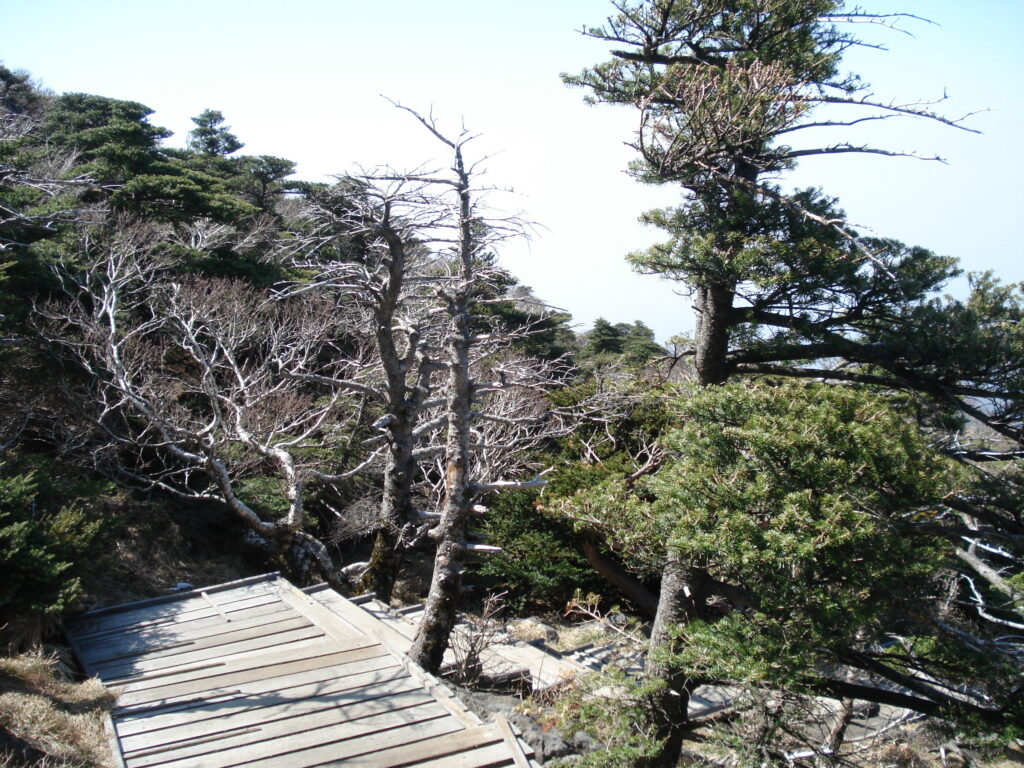
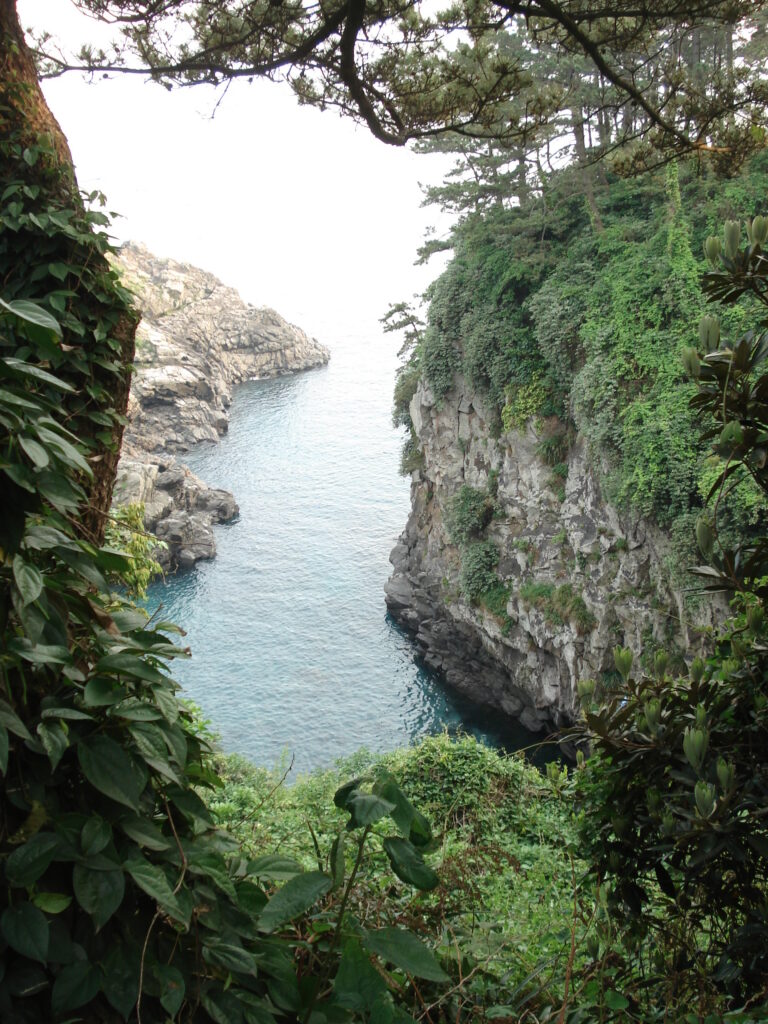
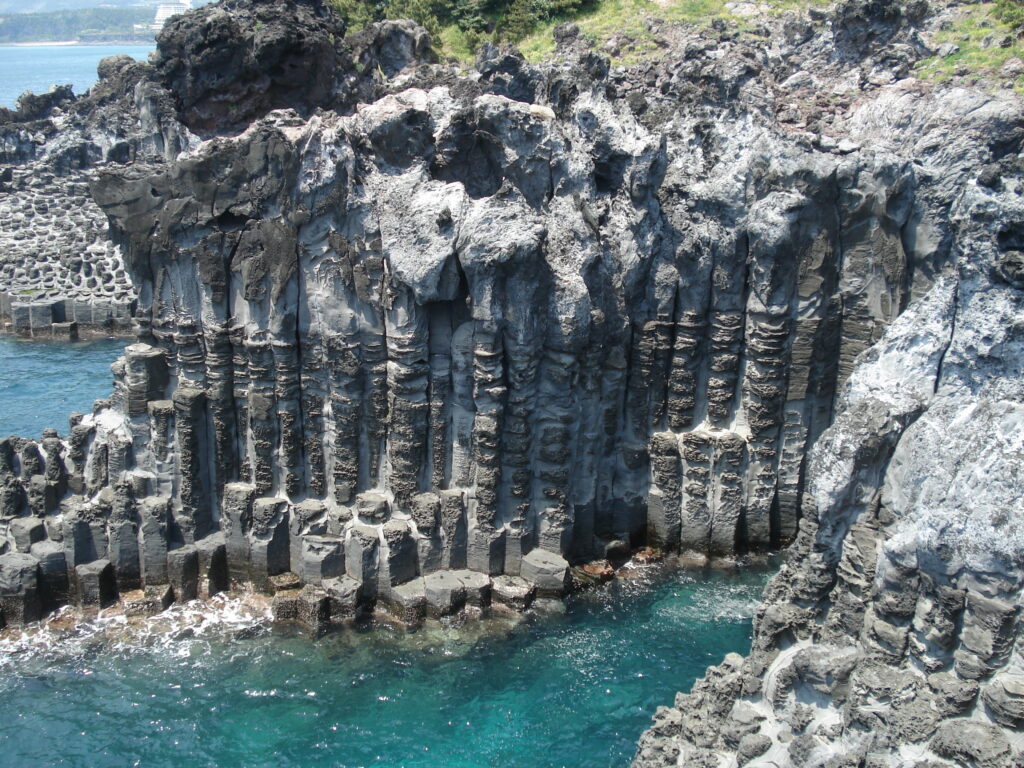
But it was nature and the people who made the biggest impression on us. Jeju is a volcanic island and has several volcanoes which you can climb. Hallasan, which is another of Korea’s sacred mountains, had really well-maintained paths to the top (mostly wooden walkways) when we climbed it and was accessible for people of most walking abilities. Views from the top into the crater are quite spectacular.
Even more impressive were the island’s lava caves. These caves, more accurately called lava tubes, form during volcanic eruptions when the outside of a flowing lava stream cools and solidifies, creating a crust or tunnel, while molten lava continues flowing underneath. When the liquid lava drains away, it leaves a long hollow passage. There is a whole complex of lava tubes on Jeju although you cannot visit them all. The one we saw was Manjanggul Lava Tube. At 7.4km, it is one of the longest lava tubes in the world (although the part visitors are allowed into is only about 1km). Inside it feels like being in a tunnel more than a cave (it is about 18m wide and 23m high) but the most impressive thing is the floor of the cave that looks like, and is, a flowing river of lava that has cooled and solidified.
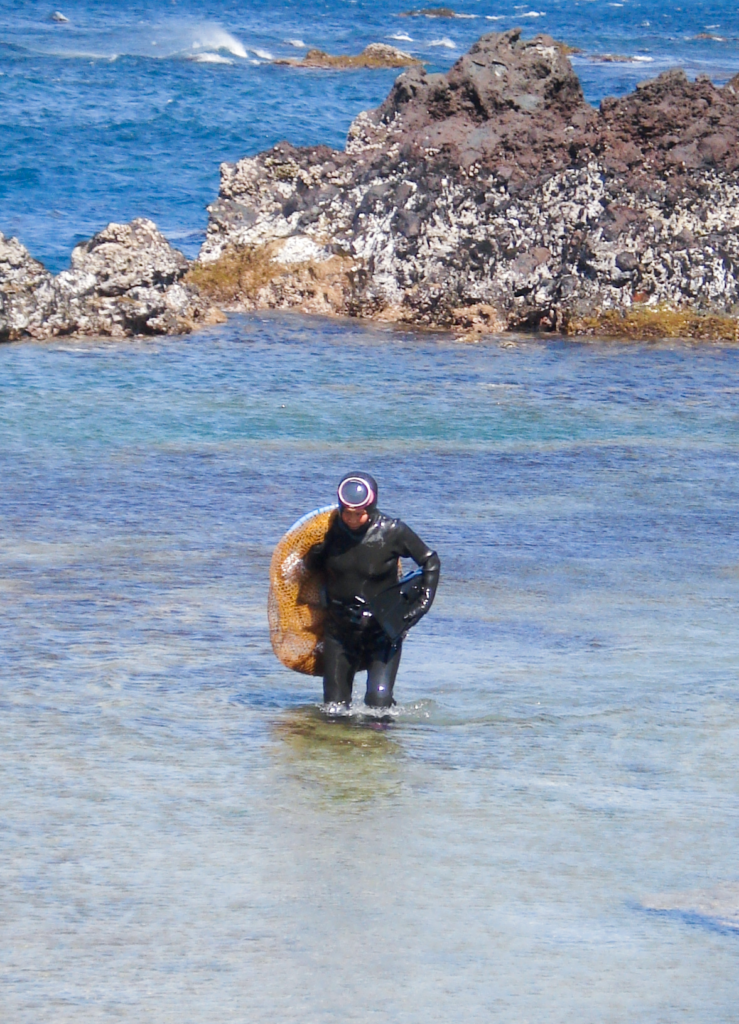
The other place on Jeju that really sticks in our memory is Jungmun Saekdal Beach. The reason is the haenyeo based there. They make their living by diving, without air tanks, for abalone, sea cucumbers and other kinds of sea products. Historically, the reason for the existence of the profession was the need to supply abalone as tribute and both men and women dived. But over time, it slowly turned into an all-female profession making these women important breadwinners for their families. Of course, there is a museum where you can find out a lot more about their history and traditions.
No commentary on Jeju would be complete without mentioning the island’s citrus fruit. It is famous for its mandarins and luckily for us they were in season when we visited. The most famous variety is called Hallabong because it has a little bump at the top which is supposed to look like the volcano. I am not sure which variety we tried, but they lived up to their reputation.
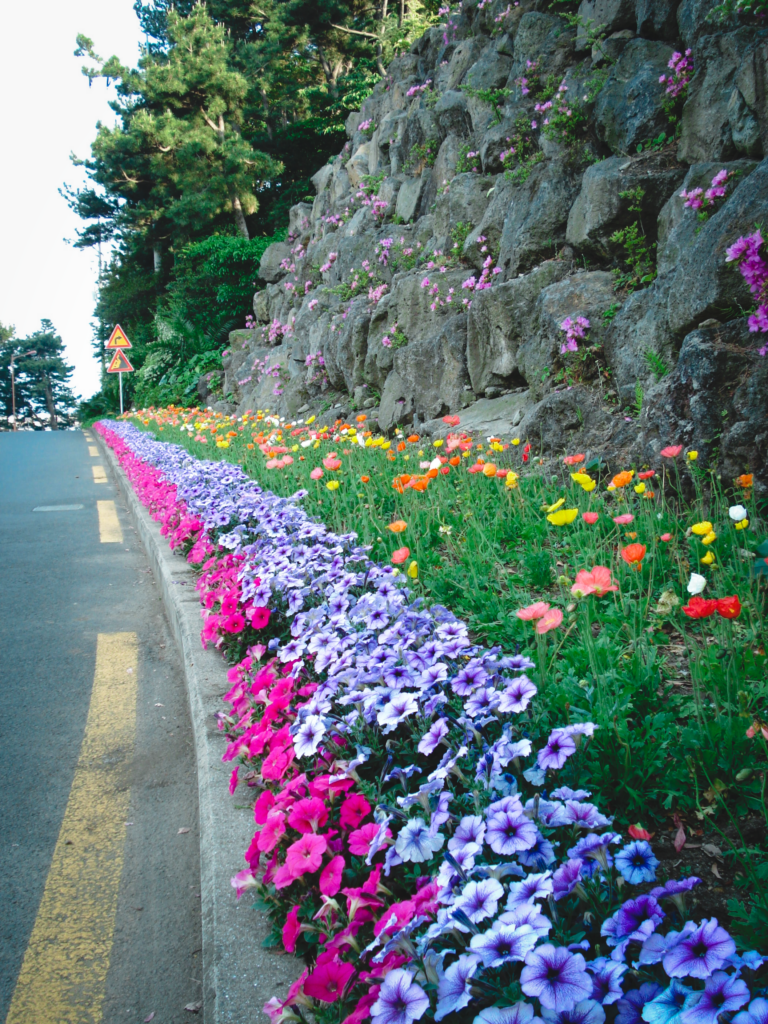
A Road Trip
On our most recent trip to Korea, we decided, for the first time, to hire a car. A part of the attraction was being able to get to more remote locations such as Beopjusa Temple on Mount Songnisan in the Songnisan National Park.
Beopjusa has long been an important centre of Maitreya worship. Founded in 553, it contains three National Treasures and together with six other Korean mountain monasteries is included on the UNESCO World Heritage List.
The temple is a participant in the Templestay programme which encourages people to stay at temples and experience a little of the monastic life. We spent two nights there and it proved a unique experience. We were given an introduction to several aspects of the philosophy of the Jogye Order of Korean Buddhism and had the opportunity to experience things most visitors do not, such as eating meals with the monks and being able to sit in on morning and evening prayers.
One of the other highlights of our visit was a walk in the forest that surrounds the temple. The path we took wound along the side of a stream and the combination of water and sunlight through the trees made it easy to understand why Songnisan is considered to be a sacred mountain. After leaving Beopjusa, we drove to Sobaeksan National Park where we were able to hike through even more beautiful forest.
Leaving the mountainous interior behind, we drove east for a couple of hours to Gangneung, a town on the coast about a hundred kilometres south of the border with the North. Gangneung and the coast either side of it are popular holiday destinations for people from Seoul.
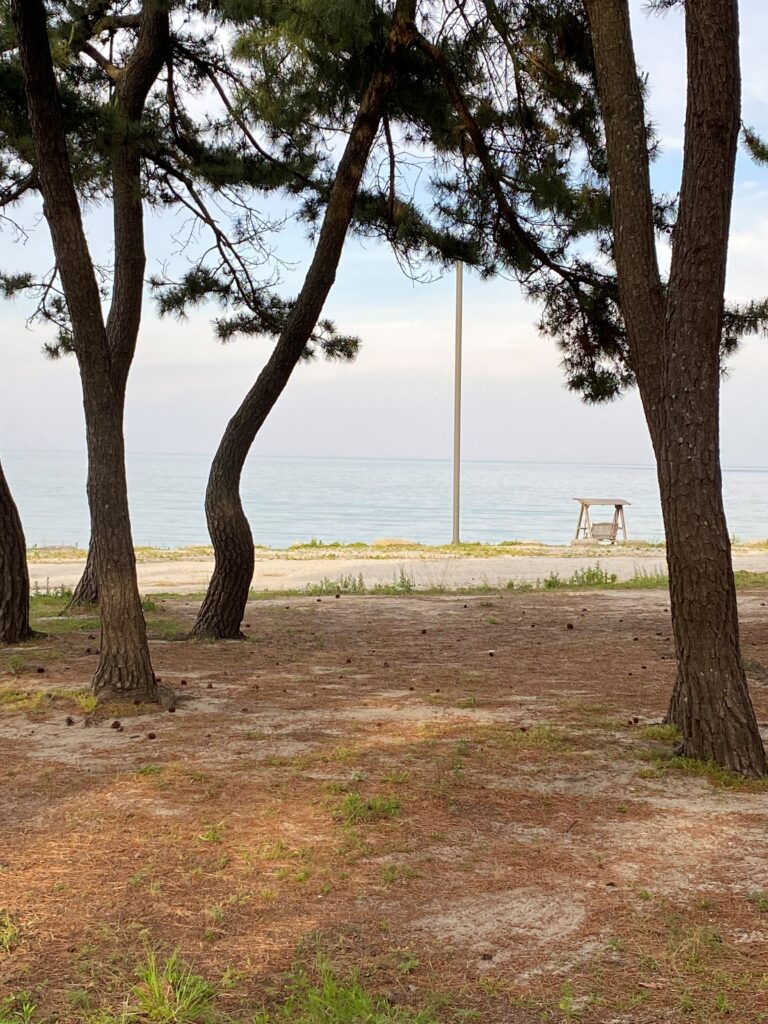
We stayed a little north of the main town by a small fishing port, so we were able to enjoy plenty of excellent seafood and, with kilometres of sandy pine-lined beaches either side of where we were located, it was easy to find places to sit and relax watching the sea or reading.
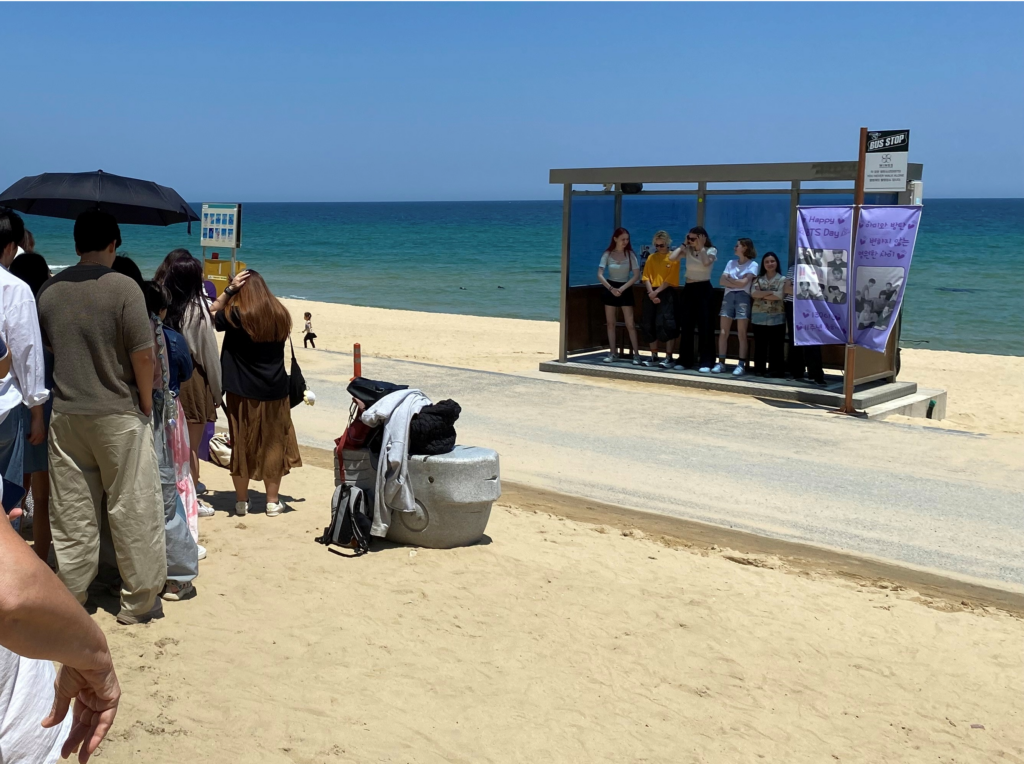
One striking local tourist attraction is the BTS bus stop – a seaside bus stop at Jumunjin Beach, made famous by BTS’s You Never Walk Alone album photoshoot. The original was just a prop for the shoot and was removed after filming. But, because so many fans came looking for it, the local council later recreated it as a tourist attraction. The day we were there, there was a queue of people waiting to have their photo taken in front of it.
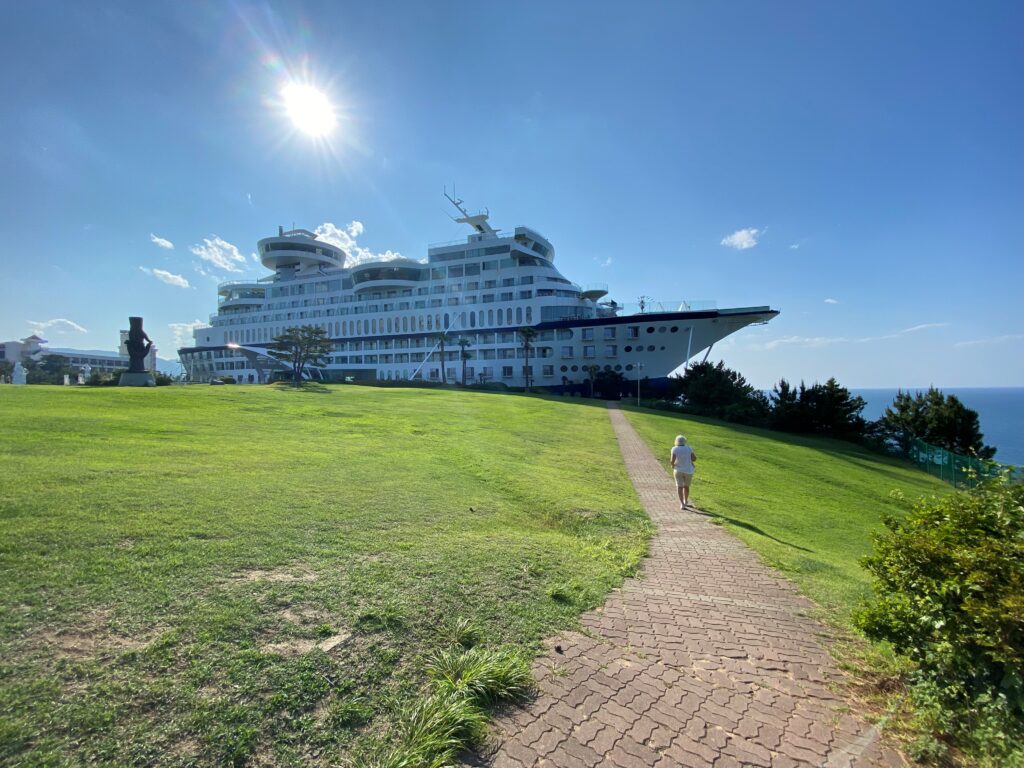
But the most extraordinary sight we encountered on this tip was an accidental discovery – a hotel designed to look exactly like a ship sitting on top of a cliff.
After so many trips and with so many places we want to revisit, arriving in Korea now feels a little like coming home. At the same time, there are whole parts of the country we barely know and many places we still want to explore. Perhaps it is that combination that keeps us coming back.
Leave a Reply